Showing posts with label mules. Show all posts

Saturday, June 4, 2016

Followup on Stagecoach Travel—an excerpt for A Touch of Texas Irish

I've had so much fun with researching this story, I've decided to post a short excerpt about stagecoach travel as told in my latest novel, A Touch of Texas Irish. I can't post too much as it's been sent to my editor, but it's not contracted yet.

In the spring of 1890,  Dr. Samuel Walker and his young Irish bride travel from Boston to Monahans, Texas via the train. In Monahans they catch a stagecoach for Fort Stockton, Texas.
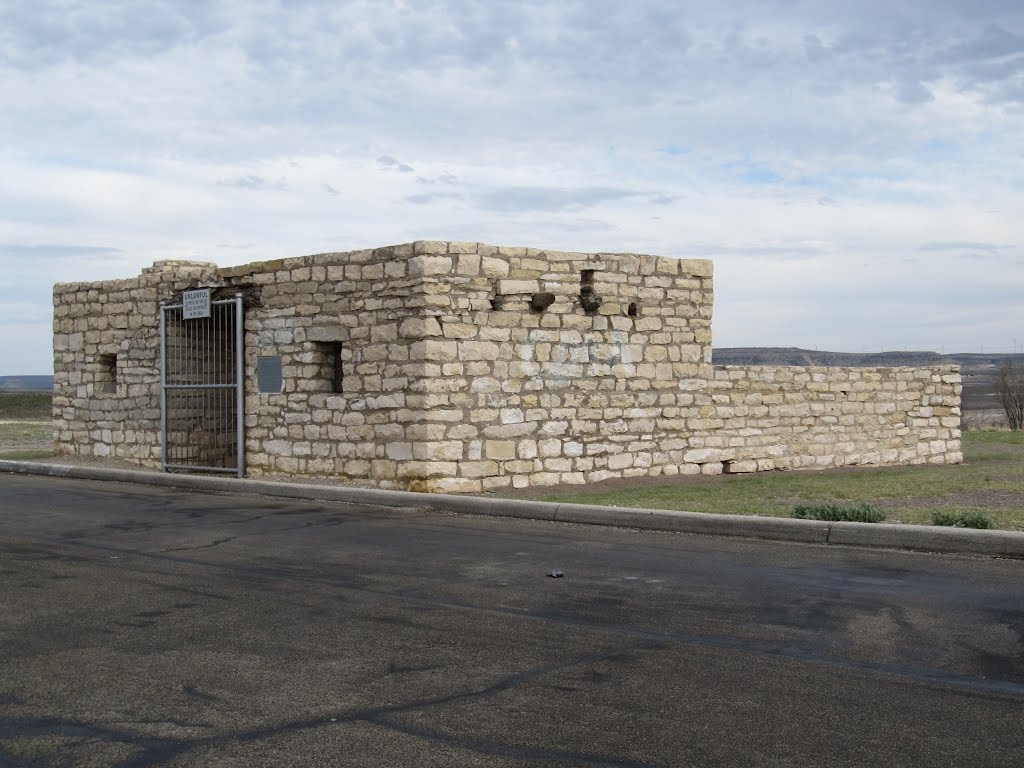
A Stage Stand replica near Fort Stockton, Texas (Google Photos)

A friendly mule posing for a snapshot. That or waiting for a treat.
(Google Photos)

They'd just finished breakfast in the cafe next to the depot and returned from the outhouse when the stage roared in and stopped in front of the stand, sending dust flying. Aileen watched in fascination as a gate swung open, and the six mules and stagecoach entered. In ten minutes, the coach came out the same door with fresh stock and a different driver. She'd like to glimpse the inside, but the tender called out, "If you're traveling to Fort Stockton, pay up. First come, first served."
Sam took her arm and hustled her over to the man. "I want two seats facing the front." He counted out a number of bills.
"Claim your seats, mister."
Sam helped her inside. She sat in the middle of the front facing seat and he took the one to her right by the door. A man in a military uniform took the seat on her left. An older couple and a cowboy sat down across from them. Seven men still stood around the tender.
"Any of you men interested in the center seat?" Several stepped forward and paid their money. "The rest of you'll ride on top. You can switch out with the center seat 'bout half way there."
Thank goodness they didn't have to bump knees with those three men. Plus the middle bench had a makeshift backrest—a wide piece of cut leather stretched and attached from one side to the other. Pieces of leather dangled from the ceiling. Aileen shot Sam a questioning glance. "Those in the center hold on to steady themselves when the road is rough." He pulled her arm under his and laid her hand on his bicep. "We'll get more dust on this row, but traveling backwards makes some folks sick." He leaned down and whispered in her ear. "Plus, I didn't want you interlocking your knees with the center row."
Aileen felt sorry for the elderly lady, but not enough to offer to trade places.
The station tender stood at the open door. "All right, folks. Remember no shooting out the windows unless it's in defense. If you don't follow the rules, the driver will put you off in the desert. He's done it before. Men, be respectful of the ladies." He slammed the door.
Sam squeezed her hand. "Hang on."
She heard the crack of a whip and the driver's bellow, "Go boys!" The coach leapt forward and Aileen's head bounced against the back wall. Thank goodness it was padded.
Sam caught Aileen to steady her and prevent further jostling until the coach settled into a steady gait. He chuckled as she repositioned her hat. "You all right?"
"I'm fine. You said he'd take off like a shot, but I assumed you were exaggerating."
The lady across the way eyed Aileen with distaste. Sam noticed she listened in on his and Aileen's conversation, and then said something to her husband. He frowned and muttered, "Mind your own business, Ethel."
Ethel studied Aileen from head to toe, well, as much of her toes as she could observe. Aileen wore one of her new dresses—blue cotton, but it was thick enough for winter wear. He'd cautioned her to wear something comfortable. Over the dress, she wore her new jacket, which she could take off if it grew too hot. Ethel wore a suit dress of heavy gray wool and appeared to be fully corseted. She'd already removed the matching cape and placed it on her knees. Sam hadn't purchased a blanket, as he didn't believe the weather would warrant the need for one. With any luck, he'd not made a mistake.
Ethel made up her mind. She lifted her chin, sniffed, and asked, "Where you from, young woman? Sounds like you have one of them Irish, accents."
"It is Irish. I've only been in the states for three months." She smiled up at Sam. "We've been wed just a little over a week."
The matron snorted. "Come over to get you a rich husband, huh?"
Her husband bit out, "Ethel, for God's sake, woman. Shut your mouth."
Aileen's face reddened and she sat up straighter. "Ethel, not that it's any of your concern, but I didn't have to marry for money. I admire Dr. Walker."
Sam had difficulty keeping his anger in check. The old biddy had no right to insult Aileen. He leaned down and kissed her hair, and then glanced back at Ethel. "As a matter of fact, madam, my wife is an heiress." He winked at Aileen. "I'm the one who married for money."
The three cowboys in the center roared with laughter. One slapped his knees as he hooted, "Har, har, har." He turned back and tipped his hat. "Good for you, old man. Looks like you got a beauty in the bargain."
Aileen blushed scarlet. Sam slipped his arm around her shoulders and worked it down to her waist. He snuggled her closer. "I did indeed, sir."
"I'm Johnson." The one who'd spoken swiveled around and offered his hand. He pointed to his companions. "This here's Dickens and Smith." He pointed to the wrangler by Ethel. "That be Oats." Sam shook Johnson's hand, thumped the brim of his hat, and nodded to the others. "Pleased to meet you. I'm Samuel Walker and this is my wife." They all four tipped their hats and mumbled, "ma'am." The two with their back to her, had to twist their necks.
Sam leaned forward and turned to the soldier. "How about you, Lieutenant?"
"Jeremy Hawkins, sir." He offered his hand. "You are Captain Walker, are you not?"
He didn't recognize the young man, but time on the prairie changed a person. "I am, or was, but I'm sorry I don't remember you."
"No reason to. I was fortunate enough to stay away from your domain, but saw you around from time to time."
"Frank Hardy, gentlemen, ma'am. As you've surmised this is my wife, Ethel. She can be quite nice when you get used to her ways."
Ethel snorted and shot daggers at her husband. He merely patted her knee. His belly bobbed up and down with his silent chuckles. Sam glanced at Aileen. Her eyes were round as saucers and she'd caught her bottom lip with her teeth. He supposed it was to keep from giggling.
Sam pointed out the window, "Look at those plants with the long green stalks and red flowers on the top?"
She peered around him. There were a number of them growing amid the prickly pear cactus, creosote bushes, and buffalo grass, names she'd learned when they'd neared Abilene and Monahans. "Yes, I see them." She tilted her head. "I guess they could be pretty with the right backdrop."
"Wait until you see a field full of them in bloom at sunset. It resembles a sea of red." She leaned back in the seat.
"I'd like that. Do they bloom all the time?"
"No, usually around this time of year—March through April—depending on the amount of rain we get. You can break one of the long stalks off and plant it in the ground. Eventually, with time and care, you can have a living, blooming fence." He lifted one of her hands and examined the soft pads of her fingers. "You must be careful though, as behind each little green leaf is a thorn. Always wear thick gloves."
She looked around and scrunched up her nose. "What is that smell?"
All three men on the middle seat chimed. "Oats!"
The young man blushed scarlet and blurted, "It weren't me." He kicked the shin of the wrangler across from him.
"Yeow! Darn it, that hurt."
Johnson added, "Ma'am, please excuse Oats. He didn't have a mama to teach him manners."
Wide-eyed and red-faced, Aileen turned to Sam. "I'm talking about that stinky medicine smell."
Silence reigned. Sam struggled to keep a straight face. Hardy didn't even try. He slapped his leg and howled, "Har-d-har-har-har." Everyone else in the coach joined him, even Ethel. Aileen gazed around in confusion, but finally chuckled with them.
She sobered. "I don't appreciate being the butt of jokes," she threw her hands up, "especially when I don't have a clue what you're talking about."
"Aw, ma'am, we weren't laughing at you. We thought Oats had...well, uh-hum...you know."
When she didn't respond, Sam leaned close to her and whispered, "They thought someone had passed gas and that was the odor you were smelling."
She stiffened and murmured. "Gosh, why would I draw attention to such?"
"Well, anyways, I think what you're smelling is the old ugly creosote bush." Johnson pointed out his side of the coach. "See the small bush with the little yellow flowers and green leaves?"
She nodded.
"They stink so bad the cattle won't eat them less they're starving, but I'm told the Indians make medicine from the shrub." He looked to Sam for confirmation.
"That's right, they do. They dry the leaves and stems, crush, and then boil them to make a tea used for a variety of ailments. The mixture can also be made into a paste to treat conditions of the skin."
"And, Dr. Walker, do you make use of these concoctions in treating your patients?" Asked Mrs. Hardy.
"No, ma'am, I do not, but only because I don't know enough about them. I hope one day to be able to visit one of the Indian medicine men in the area and learn."
 "Harrumph. You'd trust anything those heathens told you about healing?"
"Yes, ma'am, I would—especially if out in the middle of nowhere without medical supplies. I'd say their teachings would be invaluable."


I hope you've enjoyed the excerpt. Thank you for stopping by and Happy Reading and Writing!
Linda
www.lindalaroque.com

Sunday, May 8, 2016

"Gee" and "Haw"—Commands for Animals

For several of my books, I've needed the commands used for draft animals—mules. The terminology used is not something I remember, so decided to post them on my blog. Here I can easily find them when needed. I want to get the commands correct, or my book will draw criticism from someone who knows the correct terminology.

Isn't this fella cute? Love the ears.


The commands I'm listing were taken from My Horse Forum and posted my senior member harli36.


Walk—to go from halt to walk
Walk—to slow down from trot to walk
Trot on—to go from halt or walk to trot
Slooooowww—(well this one is obvious)
Gee—to turn right, most commonly used in tight turns where no forward movement is used.
Haw—same as above only for left hand turns.
Woah
Stand
Back

I've used these commands in my novella, A Love of His Own, a western time travel, and in my work-in-progress, A Touch of Irish, a historical western that begins in Ireland.

I couldn't resist this picture of a carriage mule at Jackson Square in New Orleans. She doesn't appear too happy about this costume.

Thanks for stopping by and Happy Reading and Writing!

Linda
www.lindalaroque.com

Wednesday, March 9, 2016

Stagecoach Stations in the West

I'd hoped to have the book on Stagecoach Inns long before now, but, alas, my book is not here. The seller fears it may have been lost in the mail. So, I'm going to do my best to tell the story with the information I have garnered from the web and Pecos County History.

In the East, stagecoach inns were much like large residences and hotels. The home to the left, the Harry Kennedy House in Centerville, Alabama, was built in 1837 as a stagecoach stop and hotel. Below is a picture of the Glover Tavern, a stagecoach stop in Forkland, AL. To the right is the tavern now.  It has been restored and is now a family residence.    


Many offered overnight boarding and delicious meals. With others, the accommodations and food were not ideal, but to a tired traveler they were, in most cases, acceptable.


The picture to the above right is of the Anderson Stage Stop in Monroe County. Note the dog trot style cabin. The open space provided a nice breeze which helped to cool the house. This stop is the only one remaining on the Old Federal Road. The picture to the left is of a livery stable. I'm not positive of it's location, but it is Alabama.


References for above data and photos :  www.al.com/living/indes.ssf./2014/08/few_historic_inns_and_taverns.html

In San Antonio, the stage often stopped at the Menger Hotel, and in Fredericksburg, at the Nimitz Hotel.


The Menger Hotel is still open to guests and individuals have been known to claim they've seen or heard ghosts. Teddy Roosevelt often frequented the Menger and it's saloon. A wall in the hallway is dedicated to Teddy and The Rough Riders.

The Nimitz Hotel is now the General Nimitz Museum, a fascinating place to visit and explore artifacts from World War II.

Reference:  San Antonio Transportation History Ox, Mule, and Horse Drawn Era 1845 - 1910

As stagecoach routes opened up farther west, accommodations provided were to meet basic needs and not necessarily to provide comfort.


It's important to mention, that in the West horses were rarely used to lead coaches. The best animal to use was the mule. Also, in areas where the roads were particularly rough or mountainous, or for short hauls, Celebrity wagons, also called mud wagons and mail wagons, were used. They were lighter weight than the Concord and cost about 1/2 as much to build. They carried from four to twelve passengers depending on how they were made, and had open sides. Leather or cloth flaps could be rolled down to offer some protection from the elements.

A mule occurs when a female horse is bred with a donkey. The result was an animal that is "strong and sure footed. They lacked the free spirit nature of horses and were, indeed, creatures of habit. A good caporal, the name given to the person in any wagon train in charge of the animals, had only to crack his whip in the morning for the mules to line up not only in front of its assigned wagon but even its assigned place within the team, which could consist of between six and eight animals."

Reference:  San Antonio Transportation History Ox, Mule, and Horse Drawn Era 1845 - 1910

The story I'm writing takes place in Fort Stockton, far West Texas. Stage stops might be from 30-50 miles apart, and schedules had to be kept. So, a break might last 10-15 minutes, just enough time to hitch fresh mules. The stage stands were completed by 1850 as way stations along mail routes. They were all similar, built on the same plan, made of adobe and usually stood on a rise or broad sweep of ground without much foliage. This allowed the stage tender to be able to see for miles around in every direction.

Made of adobe, they had a broad entrance with a gate and a roof overhead. It appeared much like the dog trot on log homes though the opening was wider and the roof was pitched, not flat. A room was located on each side of the entrance—one for cooking and and eating, and the other was used for sleeping and served as a storeroom. The stage company supplied the supplies and any money made off meals and supplies sold were kept by the stage tender. To the rear of these rooms, was a corral or patio where the mules were kept. The walls of the corral, made of adobe brick, were 12 to 15 feet high and two or three feet thick. When a stage entered, the mules were quickly unhitched and the stage was turned around, by hand, and pointed toward the entrance before the fresh team was hitched.

"When the fresh mules were hitched to the stagecoach and the gates again opened, with a yell from the driver, and a crack from his whip, the mules would dash out of the enclosure on a wild run, which did not slacken until the next stage stand was reached."
Stagecoaches traveling through Pecos County, stopped at places where water was available. One of those places was Escondido (Tunas Springs), 20 miles east of  Comanche Springs where Fort Stockton is located today. A replica of the stage stand is on Highway 290, east of Fort Stockton near Escondido. 

Credit for these photos goes to LenRoy Graham.


Reference:  History of Pecos County, Vol. I

Thanks for stopping by today. Happy Reading and Writing!

Linda LaRoque
www.lindalaroque.com


Saturday, February 6, 2016

Stagecoach Travel—Research for my current WIP

It's exciting to learn something new. In the last couple of weeks, I've spent a lot of time researching details on train and stagecoach travel in the 1890s. And about Pecos County in west Texas. Part of my story is set in Fort Stockton, and though I lived there for four years, I know very little about it's early history. Our public library has a set of the Pecos County History books so I spent a good deal of time reading through the first volume.

Here I am riding shotgun. (Picture at the top left)

Since my hero and heroine are traveling via stagecoach from Monahans to Fort Stockton, I'd like to share what their mode of transportation looked like inside. I had to search a long time to find a photo of the center seat. (See below) Imagine sitting there for 8-12 hours while traveling over rough terrain.

Prior to the teacup shaped Concord, coaches were boxy and had no leather braces. A long ride in one would be grueling, but I guess folks were tougher in those days. When vacationing in Colorado, my husband and I rode in a stagecoach for several miles. At first I sat inside the coach, but later joined the men on the top, the most comfortable seats on the coach, and it was nice. I could have traveled a long way from that seat.

The Concord coach, developed in 1827 by J. Stephen Abbot, had leather straps called thorough braces, which served as shock absorbers and allowed for a smoother ride. They were designed to hold, six, nine, or twelve passengers. Up to six people, including the driver, could sit on the top, if luggage didn't require all the space. Often mail was stored under passenger's feet if room elsewhere wasn't available.

Many, but not all coaches had the extra seat for two behind the driver, often used for guards, especially if they carried gold or mail. Some models had one at the back also. Coaches were 8 1/2 feet tall and weighed 1 1/4 tons. Imagine how heavy it would be loaded with passengers, luggage, and mail.

Passengers sitting on the center seat faced the front of the coach so six passengers were sharing leg room and their knees often overlapped. The only thing they had to help them stay balanced was a wide piece of leather stretched from one side one side of the coach to the other. Though the passengers which faced the rear of the coach received less dirt from the windows, the forward facing seat had more leg room and offered a better view.
This photo of Wells Fargo History Museum is
courtesy of TripAdvisor

    photo courtesy of                               
http://lastoftheplainsmen.freeforums.org/


The number of miles a stage could travel in one day varied and was determined by terrain, availability of water, conditions of the road, and weather. If the coach became bogged down in mud, passengers unloaded to help push. Stops were between 15 to 30 miles apart, depending on the terrain and availability of water.

'"From Austin to the Alamo City, one old-timer later recalled, 'the trip was made in 18 hours with breakfast at the Blanco Creek, supper in New Braunfels and arrival at San Antonio sometime during the night, weather and floods permitting.' In wet weather, the 75-mile trip took the worst part of a week."

Long-haul stages usually ran overnight, while other routes had overnight accommodations. Stops were usually ten minutes to take on fresh mules and take care of personal matters. Often, a new driver boarded.

Sources for this post came from Texas Almanac -The Source For All Things Texan Since 1887: Stagecoaching in Texas.

My next post will be on stagecoach stands. Stands in a term I not heard used before so was excited to learn all about them. Hope to see you then!

Happy Reading and Writing!

Linda
www.lindalaroque.com